
Structural Integration 101
What is Structural Integration?
Structural Integration (SI) is built on a simple idea that a body in alignment with gravity doesn’t have to work so hard. SI combines manual therapy with movement re-education to release tension, balance the structure, and create lasting change. Clients often report reduced pain, increased range of motion, and feeling more at ease in their bodies.
SI focuses on fascia, a sophisticated, web-like matrix of connective tissue that wraps around every muscle, bone, nerve, and organ. Fascia is far more than just “packaging” for our muscles; it acts as a communicative network that distributes tension and force throughout the body. Stress, repetitive motion, or injury can cause fascia to become sticky or dense, effectively “shrink-wrapping” the body and pulling the skeleton out of alignment.
For a fun video on fascia and the importance of daily movement, check out Gil Hedley’s ‘What the Fuzz’ speech.
From Rolfing® to Soma
The field of Structural Integration is rooted in the legacy of Dr. Ida P. Rolf, a 20th-century visionary and biochemist. By synthesizing her research in osteopathy, yoga, and physics, Dr. Rolf developed a systematic approach to align the body’s structure within the field of gravity. While this foundational bodywork became widely known in popular culture as Rolfing®, its formal name is Structural Integration.
The Soma method of Structural Integration represents an evolution of this lineage. Developed by Bill Williams, PhD, as a successor to Rolfing®, Soma weaves together deep manual therapy with psychological principles. By acknowledging that the mind, body, and spirit are an inseparable, multidimensional system, Soma moves beyond simple structural alignment to foster a profound body-mind connection. My training was at the Soma Institute of Structural Integration.
Science of Tensegrity
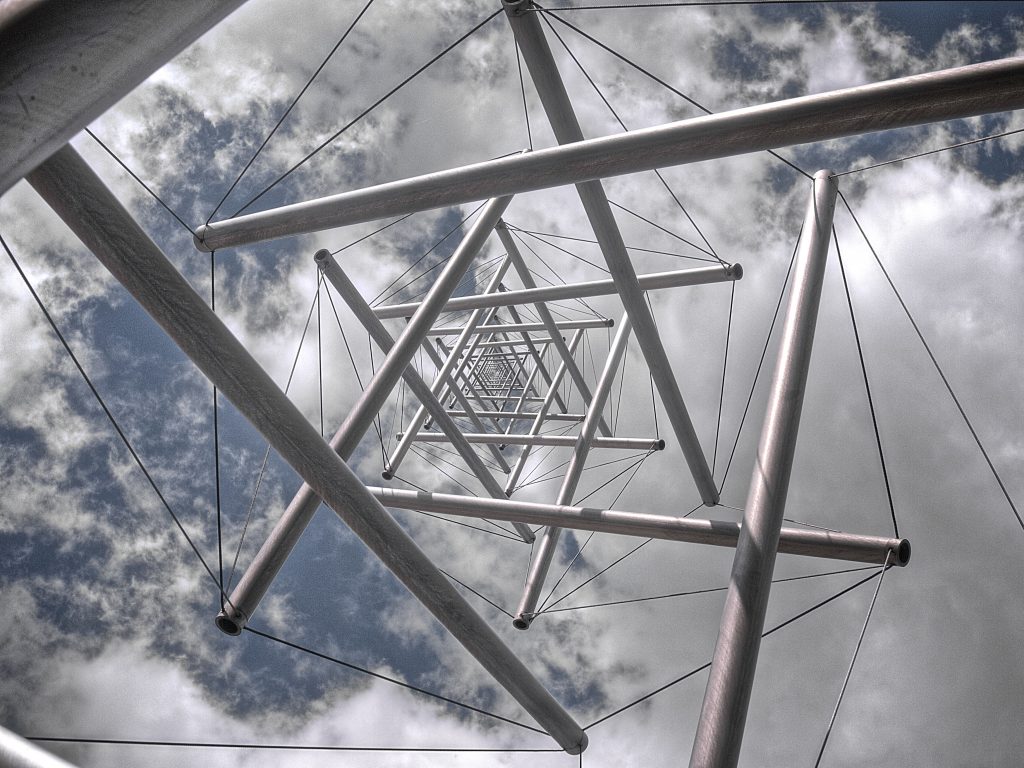
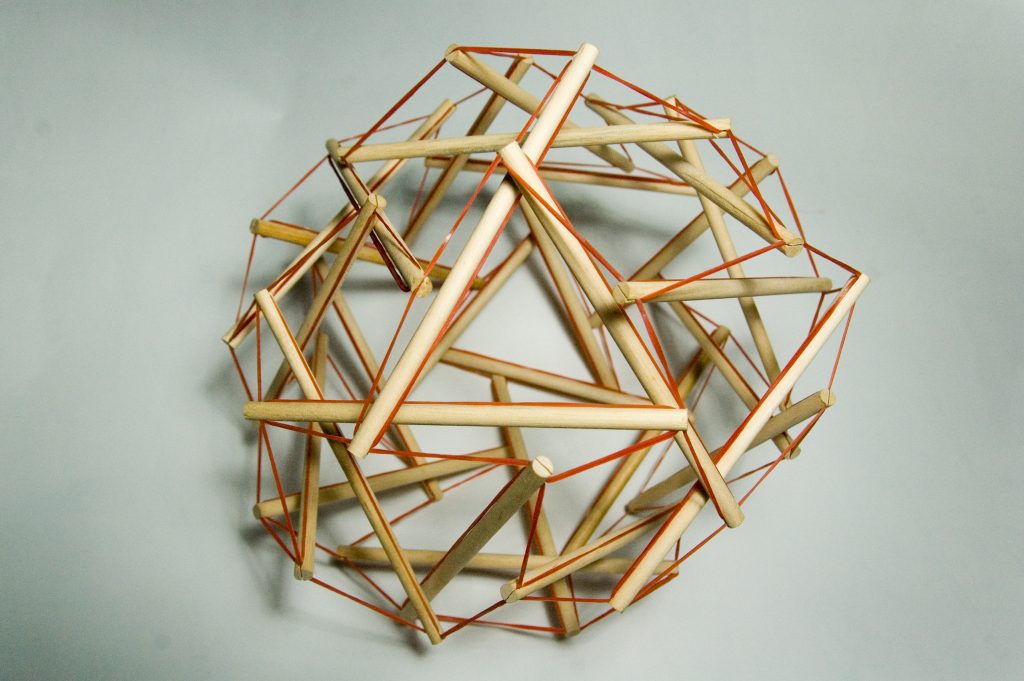
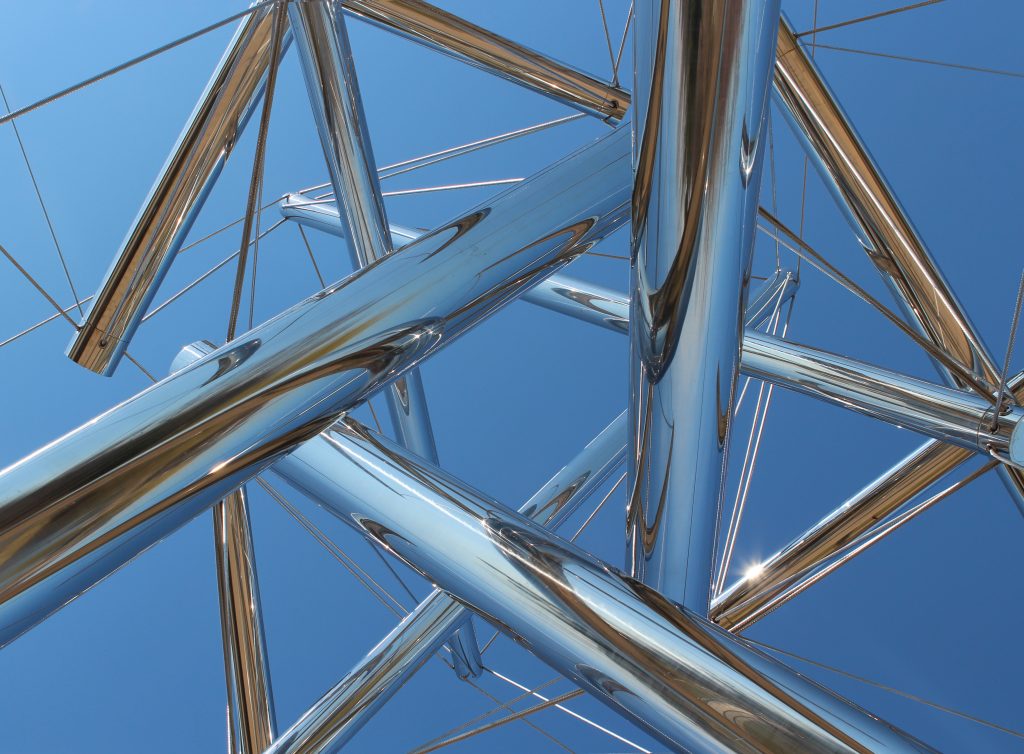
A useful way to understand the work of Structural Integration is through the concept of tensegrity. In a tensegrity structure (pictured below), stability is maintained by a continuous web of tension (the fascia) that holds together solid supports (the bones). Unlike a house, where the roof rests on the walls and the walls rest on the foundation, a tensegrity body “floats” within its own soft-tissue tension.
This explains why an imbalance in the fascia of your foot can ripple upward, causing pain in your neck or hips and why relief that only targets the painful spots often doesn’t last. SI works by balancing this tension across the whole “web,” allowing the body to reclaim a state of effortless verticality and fluid movement.
Who Benefits From This Work
Are you an active person who wants to move and recover well?
Have you accepted stress, stiffness, or discomfort in your body?
Whether you’re looking for support with a specific issue or just want to move and feel better in your body, Structural Integration can help.